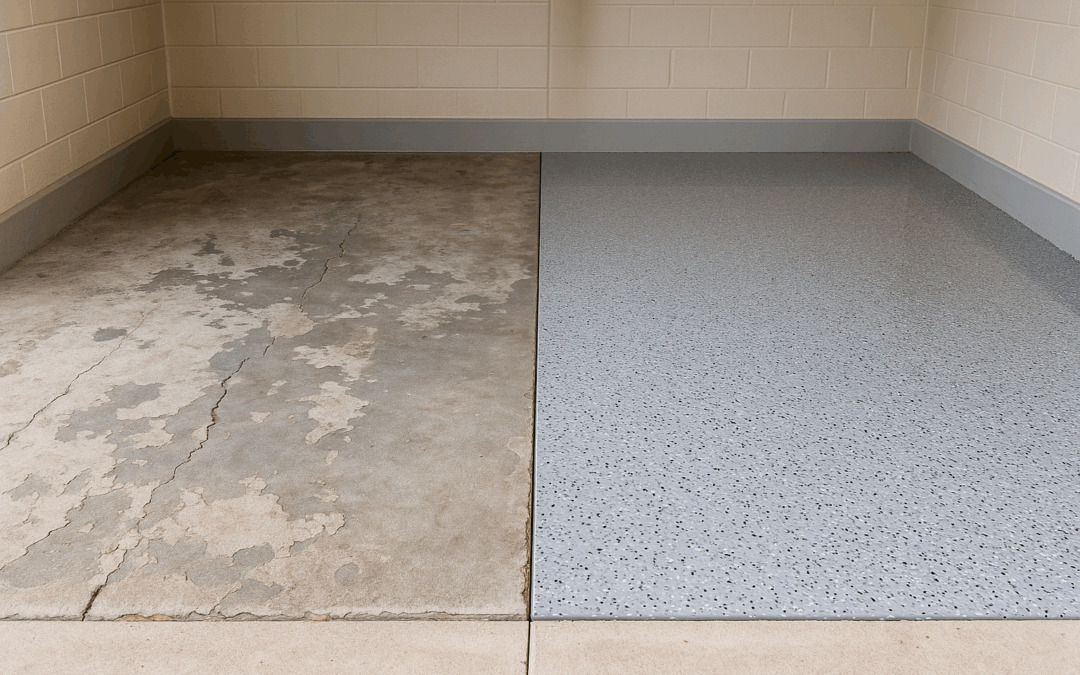
Your floor is looking rough—maybe the old coating is peeling, faded, or just outdated. The big question is: Do I have to start from scratch, or can I just coat over what’s already there?
It’s a question we hear all the time at Titan Concrete Coatings, and the answer depends on what’s hiding beneath the surface. In some cases, you can absolutely recoat an existing floor. In others, the best move is to strip and start clean. Here’s how to tell the difference—and why doing it right the first time saves time, money, and frustration down the road.
The Problem With “Coating Over” Without Checking First
It’s tempting to think a new layer will hide cracks, chips, or fading. But if the surface underneath isn’t sound, the new coating will fail just as fast—sometimes faster.
Here’s why:
- Weak adhesion: If the original coating isn’t bonded tightly, the new layer will peel right off with it.
- Moisture trapped below: Water vapor can push up through old coatings, causing bubbles or delamination.
- Unknown materials: Some cheap epoxies, paints, or sealers aren’t compatible with industrial-grade coatings.
- Uneven texture: Damaged or flaking areas cause the new coating to look patchy or uneven.
In short, a new coating is only as strong as the surface it’s sitting on.
How Titan Decides If Recoating Is Possible
At Titan Concrete Coatings, we never guess. Every project begins with a detailed surface inspection to determine whether the old layer can stay—or needs to go.
Here’s our process:
- Surface Testing
We evaluate the adhesion strength of your current coating and test for moisture beneath the slab. If the bond is weak or the concrete is wet, recoating isn’t a good option. - Mechanical Grinding
Even if the old coating is in decent shape, we still grind the surface with industrial diamond grinders. This removes contaminants, roughens the surface for bonding, and levels imperfections. - Compatibility Check
Some coatings—like acrylic sealers or thin epoxies—don’t chemically bond with advanced systems like polyurea or polyaspartic coatings. Titan tests adhesion to ensure a secure bond before applying any product. - Repair and Reinforcement
We fill cracks, patch damaged areas, and reprofile the surface before applying the new system. This step ensures your finish looks smooth and lasts for years.
The result? A coating that looks brand new—but with the strength and longevity of a professionally installed system.
When You Shouldn’t Recoat
There are a few red flags that tell us it’s time to remove the old surface entirely:
- Extensive peeling or delamination across large sections
- Trapped moisture or efflorescence (white, powdery buildup)
- Multiple old coatings stacked on top of each other
- Oil or chemical contamination soaked into the concrete
- Soft or chalky coating layers that can’t be ground clean
In these cases, Titan removes the old coating completely, repairs the surface, and installs a fresh, high-performance system designed to last 15–20 years.
Recoating Old Concrete Without Previous Coatings
If your surface is simply old concrete—uncoated, stained, or worn—that’s often the best-case scenario for a new installation. Once it’s cleaned and mechanically profiled, it’s ready for a Titan coating system that:
- Bonds permanently to the concrete surface
- Hides discoloration, patchwork, and small cracks
- Protects against moisture, oil, and chemical damage
- Adds a beautiful, slip-resistant finish that’s easy to clean
Old concrete has character—but with Titan, it also gets new life.
Why Titan Systems Outperform Simple Overlays
Not all coatings are created equal. Many homeowners try cheap “recoat kits” or paint-like products that promise an easy refresh. Unfortunately, these thin overlays usually fail within a year or two—especially in high-traffic areas.
Titan uses polyurea and polyaspartic systems, which bond chemically to your concrete and cure up to 4x stronger than epoxy. They’re designed to flex with the surface, resist hot tires, and withstand Georgia’s extreme humidity and heat.
That’s why our customers across Augusta, Grovetown, and Aiken choose Titan for long-term protection—not quick fixes.
Recoating vs. Replacing: The Cost Advantage
Replacing a slab is expensive and messy. Recoating, on the other hand, is often a fraction of the cost—and can be completed in as little as one day.
A professional inspection will determine whether you can safely recoat, saving you thousands in unnecessary demolition. And because Titan coatings are backed by a lifetime warranty, it’s a one-time investment you can count on.
So, Can You Recoat?
The honest answer: Maybe.
If your old coating is solid and the concrete underneath is stable, we can likely resurface it. If it’s peeling, bubbling, or compromised, we’ll start fresh—with a system that won’t fail you twice.
Either way, Titan Concrete Coatings gives you a surface that looks brand new, performs better than ever, and stands up to time, weather, and daily wear.
Don’t Just Cover It—Correct It.
Give your old concrete or worn-out coating the transformation it deserves.
Call Titan Concrete Coatings today for a free inspection and find out whether recoating or resurfacing is the right move for your home or business.