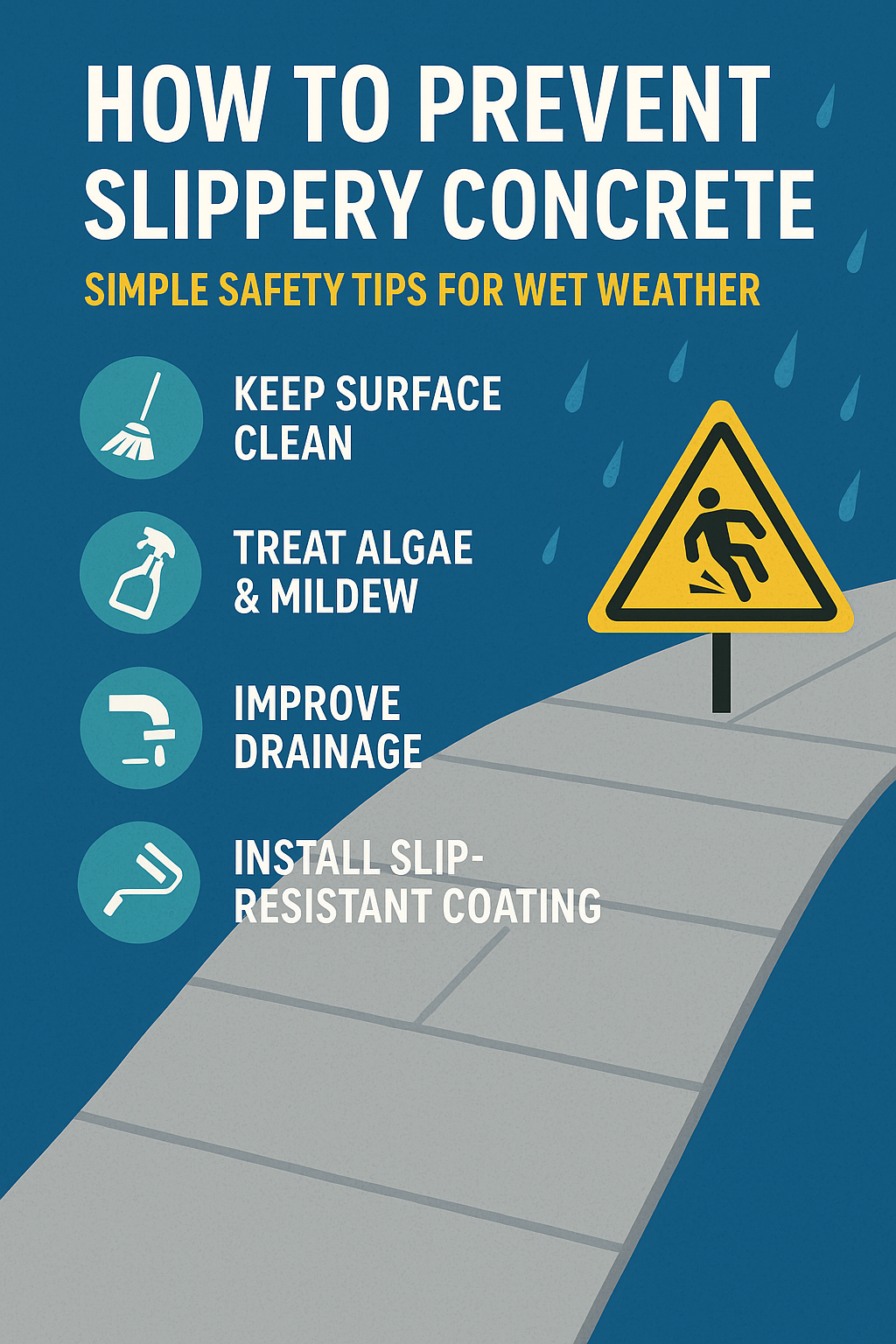
Rainy days shouldn’t turn your driveway, patio, or walkway into a slip-and-slide. But when concrete gets wet — especially older or unsealed concrete — it becomes slick fast. And for families, guests, or anyone walking through your property, that can lead to dangerous falls.
The good news? With a few simple steps, you can keep your concrete safer and more slip-resistant, even during heavy rain or humid weather. And if you want a long-term fix that performs in every season, Titan Concrete Coatings has your back.
Why Wet Concrete Gets So Slippery
If you’ve ever stepped on a wet sidewalk and felt your foot slide, you’ve experienced a common problem: smooth, porous concrete loses traction fast.
Here’s why it happens:
Algae + moisture = slick surface
Mold and mildew grow in shaded areas
Worn concrete becomes polished from foot traffic
Unsealed concrete absorbs water, increasing slipperiness
Dust and debris + water create a slippery film
This combination turns a solid surface into a hazard — especially on sloped driveways, pool decks, and shaded patios.
Step 1: Keep the Surface Clean and Debris-Free
Leaves, pollen, dirt, and grass clippings become extremely slippery when wet.
A quick sweep or blower pass removes:
Organic debris
Mud
Dust
Algae spores
Early mildew
Frequency: Once or twice per week during rainy months.
Step 2: Treat Algae and Mildew Early
If you notice green or black patches, you’re seeing early signs of slippery buildup.
Use a concrete-safe cleaner or mild bleach solution to remove:
Algae
Mildew
Dark streaks
Organic stains
Important: Avoid corrosive acidic cleaners — they weaken concrete and make the surface more slippery over time.
Step 3: Improve Drainage Around the Area
Standing water = slippery surfaces.
Check for:
Clogged gutters
Low spots in concrete
Downspouts pointed toward walkways
Pooling water after storms
Redirect water flow where possible, or consider having the area professionally leveled.
Step 4: Avoid DIY Grip Additives
Many homeowners try:
Sand
Grit mixes
Spray-on grip coatings
DIY non-slip paint
These provide very short-term relief — but they wear down quickly, especially in rain. Some even trap moisture and cause long-term concrete damage.
Step 5: Install a Professional Slip-Resistant Coating
This is the most effective and long-lasting solution.
Titan Concrete Coatings installs commercial-grade, slip-resistant systems made from polyurea and polyaspartic materials. These coatings:
Add permanent traction
Protect concrete from moisture
Prevent algae growth
Resist staining and weather damage
Hold up in rain, heat, humidity, and heavy traffic
Stay safe even around pools or wet entryways
Because Titan’s texture is built into the coating — not sprinkled on top — it stays safe and slip-resistant for 15–20+ years.
Safe Concrete Means a Safer Home
Wet weather shouldn’t put your family or guests at risk. A few quick steps can reduce slippery surfaces, but a long-lasting, truly safe solution comes from professionally installed coatings.
Titan Concrete Coatings helps homeowners across Augusta, Evans, Grovetown, and North Augusta stay safe year-round with durable, traction-boosting coatings designed for Southern weather.
Schedule your free slip-resistance assessment today and protect your home before the next rainstorm.