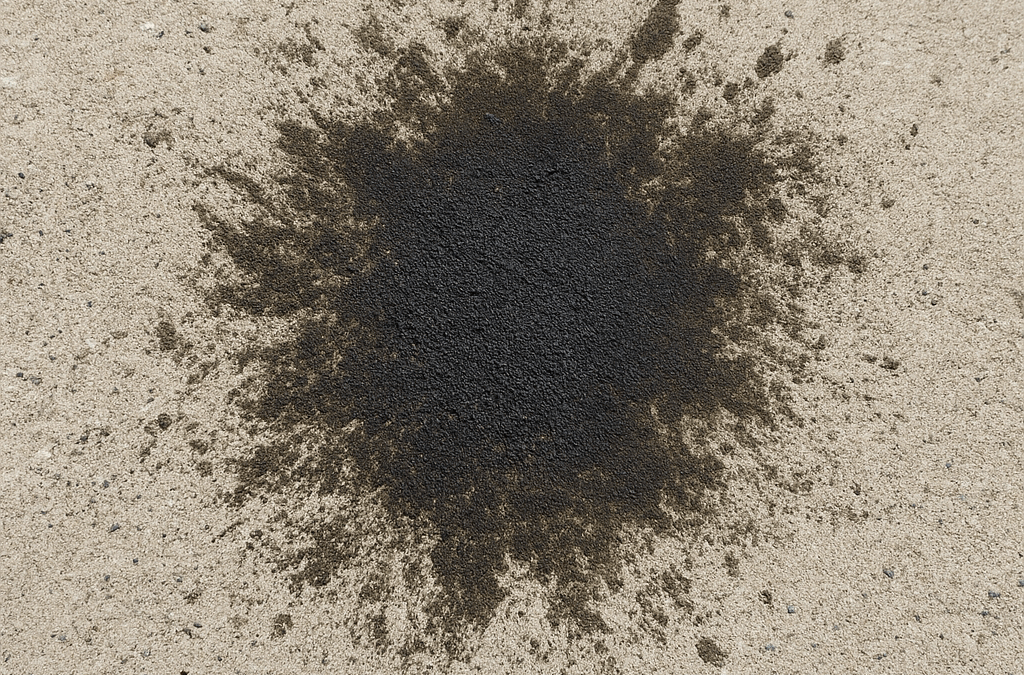
Whether it’s from a parked car or a tipped-over lawnmower, oil on concrete can look (and feel) like a disaster. The good news? It’s totally fixable—if you act quickly and follow the right steps.
Here’s how to remove oil from concrete without damaging the surface or spreading the mess.
Step 1: Blot—Don’t Scrub
If the oil spill is fresh, grab some paper towels, kitty litter, or sawdust. Sprinkle a generous amount over the stain and let it absorb the oil for 30–60 minutes.
Avoid scrubbing at this stage—it just pushes the oil deeper into the concrete.
Step 2: Sweep Up the Absorbent Material
Once the area looks dry, sweep up the absorbent material with a broom and dustpan. If it’s a large area, use a shop vac. You’ve now removed the worst of the spill—time for the deep clean.
Step 3: Apply a Degreaser
Use a concrete-safe degreaser or a heavy-duty cleaner designed for oil stains. You can also try household items like:
- Baking soda + dish soap
- WD-40 (spray and let sit)
- Oven cleaner (for tough stains)
Scrub with a stiff-bristle brush and let the solution sit for 10–15 minutes.
Step 4: Rinse and Repeat (If Needed)
Rinse the area with hot water and check your progress. Some stains may take a couple of rounds to fully lift. If it’s still visible, reapply the cleaner and scrub again.
Avoid using a pressure washer too close to the concrete—it can etch or damage the surface if you’re not careful.
Step 5: Seal It for the Future
Once you’ve got the stain out, consider applying a concrete sealer to help prevent future oil absorption. Or better yet…
Concrete Coatings Make Oil Spills a Non-Issue
If your garage or driveway had a Titan Concrete Coating, that oil would’ve sat on top—easy to wipe up without a trace. Our polyurea and polyaspartic coatings form a smooth, non-porous surface that resists oil, grease, water, and stains.
Cleanup becomes a breeze. And best of all? You get a floor that looks incredible and lasts for years.
Want your floor to work for you, not against you?
Contact Titan Concrete Coatings to get a free quote.