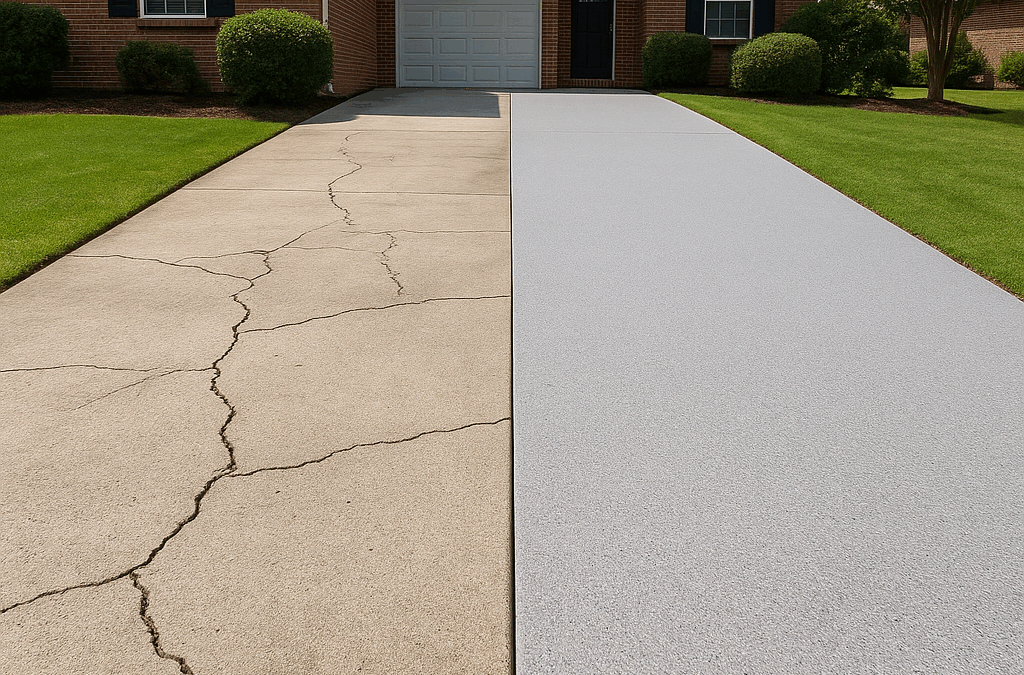
You just had your driveway or patio coated—maybe to give it a fresh new look or to protect it from the elements. But now, a few months later, you’re noticing cracks again. Maybe they’re small hairlines, or maybe they’re spreading faster than you expected. Either way, you’re asking the same question many homeowners do:
“Why is my concrete cracking even though it was coated?”
The short answer? The problem usually starts beneath the coating. Let’s break down what’s happening and how Titan Concrete Coatings helps you fix it for good.
The Truth About Concrete: It Moves
Concrete may seem solid, but it’s always expanding, contracting, and flexing with temperature and moisture changes. In Georgia’s hot summers and cool winters, that constant movement puts stress on your slab.
If your coating can’t handle that movement, cracks are inevitable. Most basic epoxies and sealers are too rigid, so when the slab shifts, the surface layer breaks apart. That’s why coatings can look perfect one season and start spidering the next.
At Titan Concrete Coatings, we use flexible, high-performance polyurea and polyaspartic coatings that move with your concrete instead of fighting it. That means no cracking, chipping, or delamination as the seasons change.
Why Cracks Come Back After a Coating
Even the best coating can’t hide deeper issues underneath the surface. Here are the most common reasons your coated concrete may be cracking again:
- Structural Cracks Beneath the Surface
If your slab already had deep cracks, simply coating over them doesn’t solve the problem. The cracks continue to expand below, eventually pushing through the new layer. - Poor Surface Prep
If the installer didn’t grind or clean the surface properly before coating, the material can’t bond tightly to the concrete. Over time, that weak bond allows cracks to form and spread. - Moisture Pressure from Below
Water vapor rises through the concrete (especially in humid climates like Augusta’s). Without a proper moisture barrier, that pressure can lift or crack the coating from beneath. - Inferior Coating Material
Store-bought epoxy kits or cheap coatings aren’t designed to withstand driveway-level stress from vehicles, UV rays, and temperature swings. - Ignoring Expansion Joints
Concrete is supposed to have “flex zones” where it can expand safely. If those joints are filled or coated improperly, stress builds—and something’s gotta give.
What Titan Does Differently
At Titan Concrete Coatings, our systems are designed to stop cracks in their tracks. Every project starts with diagnosis, not guesswork.
Here’s how we make sure your new coating stays beautiful for years:
- Professional Surface Preparation
We use industrial diamond grinders to remove old coatings and open the surface. That ensures a strong mechanical bond that won’t peel or lift. - Crack and Joint Repair
Before applying the new system, we fill and reinforce cracks using flexible compounds that expand and contract with the slab. - Moisture Mitigation Layer
We apply a moisture-resistant basecoat to block vapor from pushing through the surface—a common reason cheaper coatings fail. - Flexible, UV-Stable Topcoats
Our polyurea and polyaspartic systems flex with the concrete and resist UV damage, chemicals, and heavy traffic. - Lifetime Warranty Protection
We stand behind every coating we install—because we know it’s done right from the ground up.
Understanding the Difference: Epoxy vs. Polyurea
Most coating failures come down to using the wrong material. Traditional epoxy is thick and brittle—it looks good at first but can’t handle outdoor conditions.
Polyurea and polyaspartic coatings, on the other hand, are thinner, more flexible, and bond chemically to the concrete itself. That gives them:
- 4x stronger adhesion
- Higher UV and heat resistance
- Faster curing time (usually in one day!)
- Superior flexibility for temperature swings
In short, they don’t just look better—they perform better.
How to Prevent Cracks from Coming Back
Once Titan installs your coating, keeping it strong is easy. A little simple maintenance goes a long way:
- Clean spills and debris regularly to reduce wear.
- Avoid dropping sharp or heavy tools directly on the surface.
- Reapply a protective clear coat every 10–15 years for added shine and protection.
You’ll spend less time worrying about damage—and more time enjoying a flawless outdoor space that elevates your home’s curb appeal.
Why It’s Worth Fixing the Right Way
A cracked driveway or patio isn’t just an eyesore; it can lower your home’s value and become a safety hazard. Small cracks trap water, which freezes and expands in winter, widening the damage. Left alone, it can lead to major structural repairs.
A Titan coating isn’t just a surface fix—it’s a structural safeguard. We repair, protect, and seal your concrete in a way that’s meant to last through seasons, not just survive them.
Stop Cracks Before They Come Back
If your freshly coated driveway or patio is already showing cracks, don’t settle for patchwork solutions. You deserve a finish that lasts—and a company that guarantees it.
Built to Flex. Made to Last.
Let Titan Concrete Coatings give your home a surface that stays strong and beautiful year after year.
Call today to schedule your free inspection and find out how our crack and slip-resistant coatings protect your investment for the long run.